
Motherland: Fort Salem
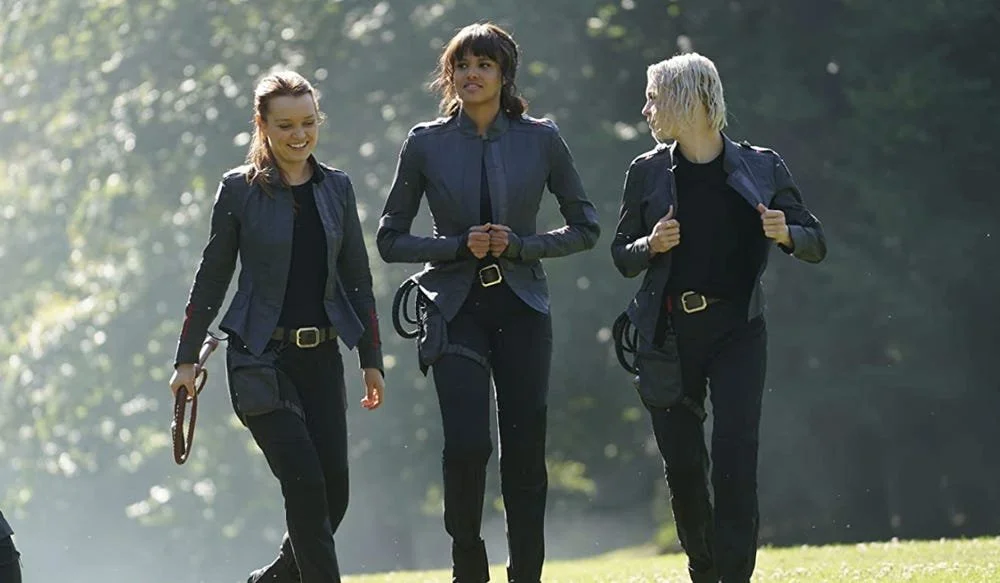
Unit unity—Tally, Abigail, and Raelle from Motherland: Fort Salem © Freeform
(Relatively spoiler free!) Fantasy TV usually has to get two things right to succeed. First, fans must truly connect to the world that's been built. Second, fans must fall in love with the characters within it. The creators of Motherland: Fort Salem got those two things spectacularly right. MFS has a passionate fan base for good reason. It has a beloved, canonical queer couple, a compelling non-canon queer ship, plus an ensemble cast of women playing characters with authority, strength, purpose and power. It boasts a distinct, cinematic aesthetic, and a rich, (mostly) internally consistent, complex fantasy world.
This is high-concept, no doubt about it. Imagine the Salem witch trials ended in a treaty where persecution stops but in exchange witches must use their powers to defend the country, leading to a system of compulsory military conscription which is embraced by some, tolerated by many, and deeply resented by others.
MFS is wildly ambitious, with big stories to tell, but possibly too niche to attract a huge audience. Plus, it screened on an America-only network, was unabashedly queer, had morally-complex scifi themes, intricate plots, and a limited marketing budget. That doesn’t scream mainstream. But what it doesn’t lack is vision.
Considering MFS ran from 2020 to 2022, peak Covid years, it’s kind of amazing it got made at all. It needed more time to tell its story, three seasons wasn’t enough for something this big. What they could have done with the six seasons that Lost Girl got is anyone’s guess, but this show was so much more expensive to make. There is no doubt though that late season one, all season two, and the first two episodes (andsome other parts) of season three are near-flawless fantasy television. It’s a technical masterpiece, gorgeously shot, and rewards repeat viewing.
Our three MFS heroines, Tally Craven (Jessica Sutton), Abigail Bellweather (Ashley Nicole Williams) and Raelle Collar (Taylor Hickson), all have different, conflicting reasons for being in the army. They are thrown together as a Unit for basic training and soon realise they have a unique bond and complementary powers. Outside the army, dodgers run from the draft, while a terrorist organisation called The Spree kills civilians to score political points against conscription. The scene is set early for witch-on-witch turmoil, but eventually they realise that witches need to stop fighting each other in order to face a bigger enemy hell-bent on their destruction.
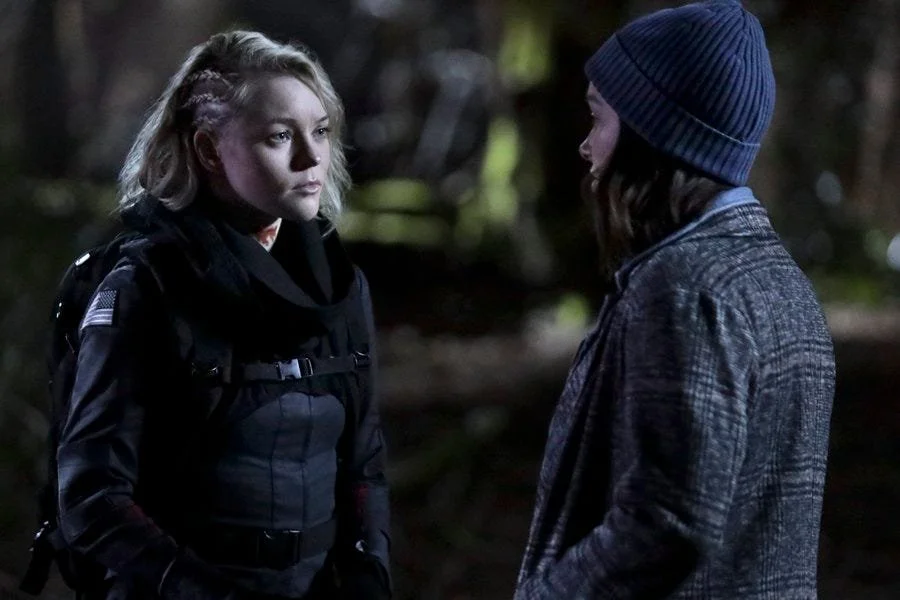
Taylor Hickson and Amalia Holm in Motherland: Fort Salem © Freeform
The matriarchal world of MFS puts women in the seats of power. It also disregards heterocentrist norms. There's witch and civilian, there’s definitely male and female, but there's no gay and straight. These women celebrate sex with whomever they wish to have it. Sexual energy is a power source, and their sex lives are a an essential part of existence, like sleeping and breathing. The writers give sex and romance a lot of air time - all perfectly M-rated - and the show is all the better for it.
The fiery Unit relationship of Raelle, Tally and Abigail is addictive. Their drill sergeant Anacostia Quartermain (Demetria McKinney) is a strong presence, and her unexpected bond with terrorist Scylla Ramshorn resonates. General Sarah Alder is a beast of a role and Lyne Renée owns the bombastic side of her, but her greatest moments are the quieter ones she shares with Tally and Anacostia.
The canonical couple is Raelle and Scylla. Hickson is note perfect for Raelle—she’s scrappy, disrepectful, and tormented. Swedish bombshell Amalia Holm gives Scylla her bad girl rage and darkness, but also her playfulness and humour (and amazing eye colour). Together they’re angsty, flawed, and share off-the-charts chemistry. There is a startling level of queer representation, something only matched in fantasy TV by Wynonna Earp and Lost Girl (bless these brilliant Canadians). Raelle and Scylla (yes - bit of an inspiration, not gonna lie) have a complicated, unequivocally sexually-charged relationship from the pilot to the finale. There’s no ambiguity, no queerbaiting, and their love was interwoven into all major plotlines.
This all-inclusive, feminist fantasy world with a queer vision is riotously entertaining, sometimes violent, and shamelessly romantic.